I design contextually-aware, ethical AI systems that support human wellbeing, emotional regulation, and agency.
Scroll down to see my selected work ↓
This portfolio highlights research and design work from my 7.5 years as a conversational AI designer, specifically those most relevant to the Personal Robots, Fluid Interfaces, and Cyborg Psychology groups at the MIT Media Lab.
RELEVANT TO: PERSONAL ROBOTS, CYBORG PSYCHOLOGY
RELEVANT TO: PERSONAL ROBOTS, FLUID INTERFACES, CYBORG PSYCHOLOGY
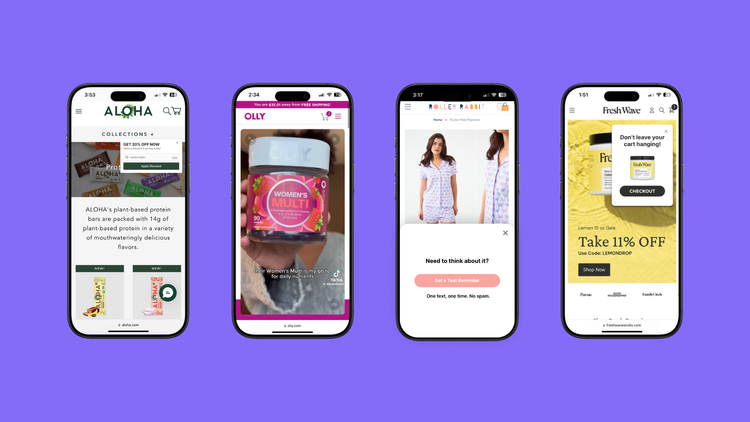
Behavioral Nudges and Consumer Intent Modeling in AI-Mediated Choice Architectures
RELEVANT TO: FLUID INTERFACES
AI Literacy + Teaching
GALILEO Annual Conference for Educators, Keynote Panelist, AI in Education (Upcoming, Apr ‘26)
Agnes Scott College, Guest Lecturer, Intro to the Ethics of Conversational AI Design (Mar ‘24)
Georgia Institute of Technology, Guest Lecturer, Conversational AI Design Workshop (Apr ‘23)
Agnes Scott College, Guest Lecturer, Conversational AI Design Workshop (Apr ‘23)
Museum of Design Atlanta, Teen Jam: Designing Conversational AI Experiences (Mar ‘23)
Button Content Design Conference, Relationship Counseling with Bots, (Oct ‘22)
VOICE Summit Conference, Designing for Emergency Situations (Oct ‘22)
Child Development Research
(Only relevant to the Personal Robots’ interest in seeing experience in Early Childhood Development — I have a degree in Child Development Psychology)
Language Development in Children, Observational Study (LINK TO PAPER)
The study investigates how children develop language skills across early childhood, focusing on comprehension, production, syntax, and communicative interactions through naturalistic observation of preschool and kindergarten children. It found that language abilities improve markedly with age—such as grammar mastery and expressive complexity—and that social interaction and adult support help scaffold development, with younger children relying more on gestures and adult modeling than older ones who demonstrate more autonomous communication.
Fine Motor Skills in Children, Observational Study (LINK TO PAPER)
The study examines the development of fine motor skills in young children, focusing on tasks such as grasping, drawing, cutting, and hand–eye coordination across different age groups. Results showed clear developmental progression with age, with older children demonstrating greater precision, control, and bilateral coordination, highlighting how fine motor abilities emerge through both biological maturation and repeated practice in structured environments.
Alternative Forms of Grammar Instruction, Meta-Analysis (LINK TO PAPER)
This paper synthesizes research on alternative forms of grammar instruction, comparing traditional explicit grammar teaching with more implicit, usage-based, and communicative approaches. The findings suggest that grammar learning is most effective when embedded in meaningful context and interaction, supporting the idea that language acquisition is driven by exposure, pattern recognition, and use rather than isolated rule memorization.
Publications
Florian Pecune, Shruti Murali, Vivian Tsai, Yoichi Matsuyama, and Justine Cassell. 2019. A Model of Social Explanations for a Conversational Movie Recommendation System. In Proceedings of the 7th International Conference on Human-Agent Interaction (HAI ’19), October 6–10, 2019, Kyoto, Japan. ACM, New York, NY, USA, 9 pages. https://doi.org/10.1145/3349537.3351899